- レクチャー
- 大人
- ごみ・資源循環
- 先着
【Ended】Let’s Sort! Your Friendly Guide to Waste & Recycling in Japan(【終了しました】日本のごみとリサイクルのやさしいガイド)

Implemented on Wednesday, September 9, 2026
Do you find Japan’s waste sorting rules are hard to follow? You’re not alone. In the beginning,you may feel confused and overwhelmed due to a lot of categories and rules that vary from neighborhood to neighborhood.
This seminar will explain the basics of waste sorting and recycling in Japan with inspiration from Zero Waste Town in Japan; Kamikatsu.
We’ll compare the waste management systems of Minato-Ku and Kamikatsu Town in Tokushima Prefecture, a community engaging in sorting waste into more than 40 categories, to give you a deeper understanding of waste management and some insight you could also bring back to your daily life.
Whether you’re new to Japan or simply want to improve your recycling habits, this seminar is for you. We look forward to seeing you there!
※This seminar will be conducted entirely in English, so that those who are not comfortable with Japanese can easily understand.
2026年9月9日(水)実施
日本のごみ分別ルールは難しく感じますか?それはあなただけではありません。最初は、たくさんの種類があり、地域によってルールも異なるため、戸惑うこともあるでしょう。
このセミナーでは、日本のゼロ・ウェイストタウン、上勝町を例に、日本のごみ分別とリサイクルの基本を解説します。40種類以上のごみを分別する徳島県上勝町と、港区のごみ管理システムを比較することで、ごみ管理への理解を深め、日常生活にも役立つヒントを得られるでしょう。
日本に来たばかりの方も、リサイクル習慣を改善したい方も、ぜひご参加ください。皆様のご参加をお待ちしております!
※日本語が難しい方でも理解しやすいように、本講座は全編英語で実施します。
| Date & Time | Wednesday, September 9, 2026, 6:30 PM–8:00 PM (Registration opens at 6:15 PM) |
| Location(Format) | Online (Zoom Meeting) An archived recording will be available two weeks after the seminar exclusively for registered participants. |
| Eligibility | Junior high school students and above, primarily residents, employees, and students of Minato City. (Participants from outside Minato City are also welcome.) |
| Lecturer | Natsuki Nakahara(amu GIA) 【profile】 Based in Kamikatsu Town, Tokushima Prefecture, she works for the general incorporated association Amu, promoting the Kamikatsu Zero Waste Town Plan, supporting learning sessions on waste and community development, and assisting public relations. She also works fully remote for a Tokyo-based media company. |
| Capacity | 20 participants (first-come, first-served) |
| Fee | Free of charge |
| 日時 | 2026年9月9日(水)18:30~20:00(受付は18:15~) |
| 会場 | オンライン(Zoomミーティング) ※お申込みいただいた方限定で講座後2週間アーカイブ配信いたします。 |
| 対象 | 港区在住・在勤・在学を中心とした中学生以上の方 (区外の方も参加できます) |
| 講師 | 仲原 菜月氏(一般社団法人amu) 【プロフィール】 徳島県上勝町在住。一般社団法人amuにて上勝町ゼロ・ウェイストタウン計画の推進に携わり、ごみやまちづくりに関する勉強会のサポートや、広報支援を行う。また、都内メディア会社にてフルリモート勤務。 |
| 定員 | 20名(先着) |
| 参加費 | 無料 |
【Event Report】
The event began with an introduction to the zero-waste initiatives in Kamikatsu Town, Tokushima Prefecture. Located in a mountainous area of Tokushima, Kamikatsu is a small town with a population of approximately 1,200. In 2003, it became the first municipality in Japan to make a Zero Waste Declaration. Since then, the town has promoted waste separation and resource circulation with the participation of its residents. Today, Kamikatsu maintains a recycling rate of approximately 80%, significantly higher than the national average.
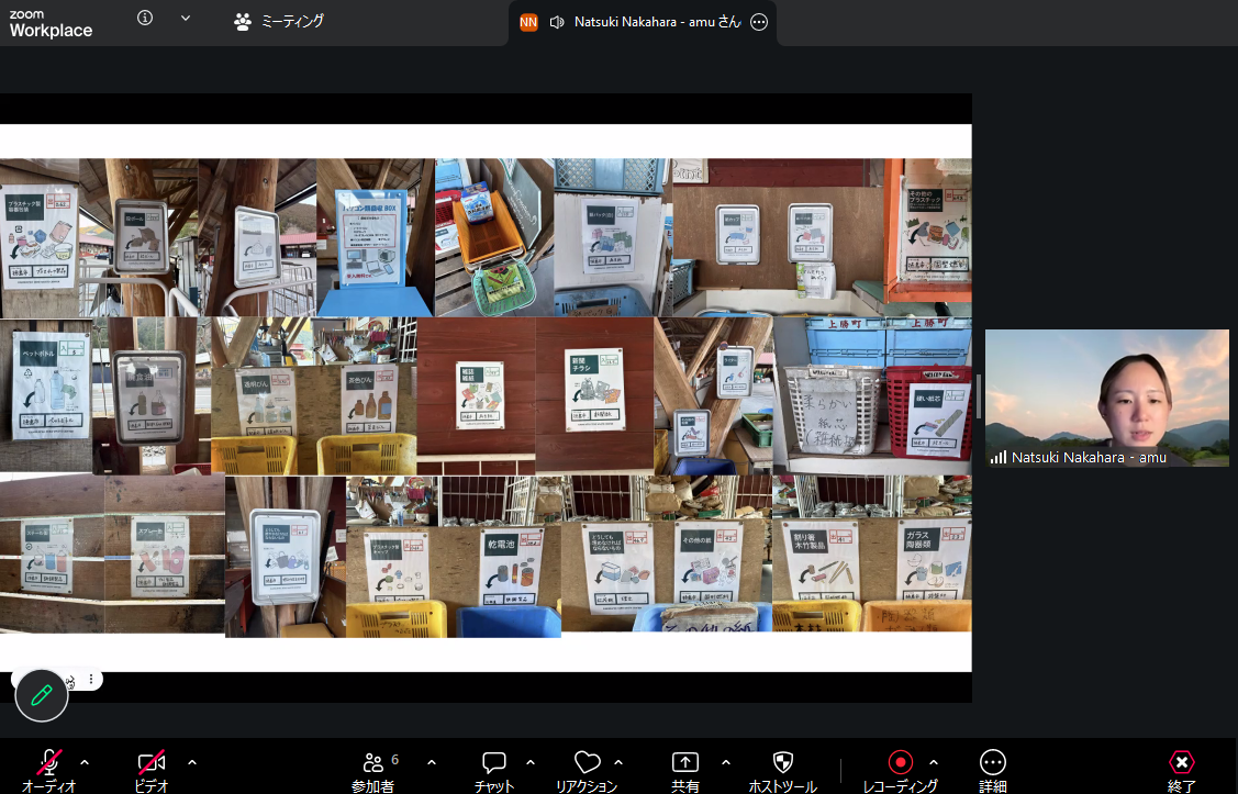
Next, the participants learned about the distinctive waste separation system in Kamikatsu. There are no garbage collection trucks in the town. Instead, residents bring their waste to the Zero Waste Center themselves, where they separate it into 44 categories. Even paper is divided into several subcategories, including newspapers, cardboard, and milk cartons, allowing different types of resources to be sorted separately. Participants were also introduced to a system that allows residents to see where and how each resource is recycled, whether each resource generates revenue for the town, or whether it requires disposal costs.
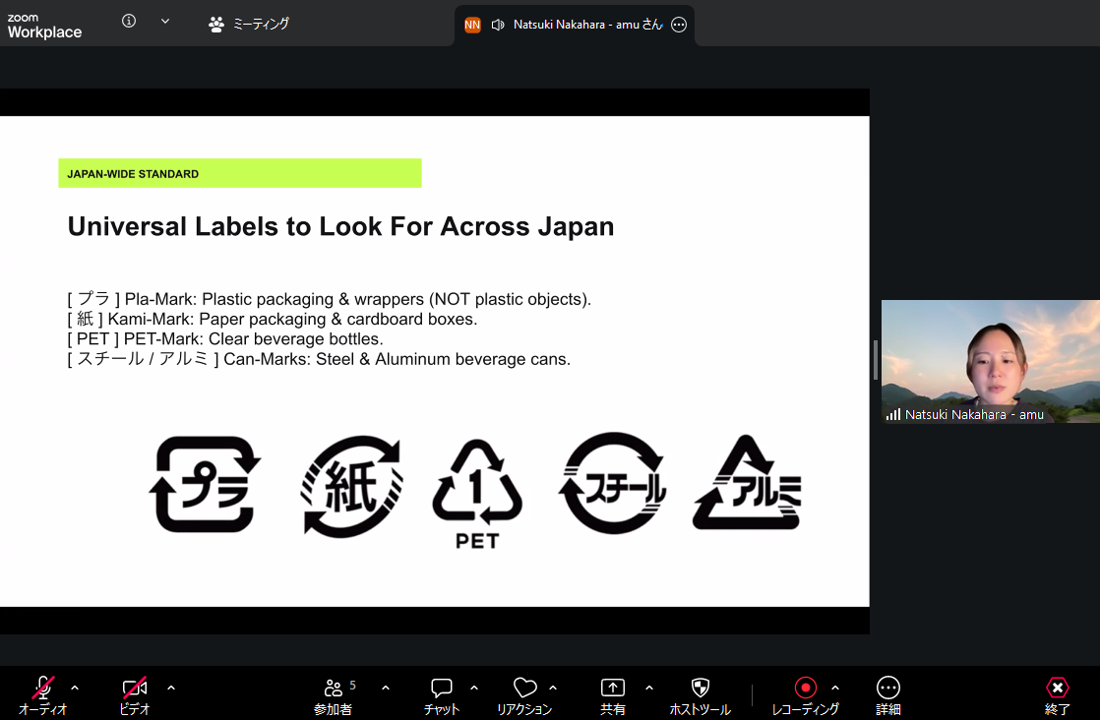
The event also introduced Minato City’s waste and resource collection system. In Minato City, waste is separated into categories such as burnable waste, non-burnable waste, bottles, cans, plastic bottles, used paper, and plastic resources. Although the system is not as detailed as Kamikatsu’s, the categories that residents need to be aware of in their daily lives are not so different. While Kamikatsu places greater emphasis on residents bringing their waste to the collection center and separating it in detail, Minato City has adopted a convenient collection system that is easy for many residents to use. The event explained that each community has developed approaches suited to its own characteristics.
Lastly, the event highlighted that Kamikatsu’s focus is not only on recycling, but also on preventing waste from being generated in the first place. Sharing items within the community and composting food waste are examples of ways to reduce the overall amount of waste. The participants also learned about the idea that “waste is a resource in the wrong place,” which emphasizes the importance of reconsidering the value of the things we use.
Through the lecture, participants had an opportunity to think about how resources can be circulated and what each of us can do in our daily lives to reduce waste.
【当日の様子】
最初に、徳島県上勝町におけるゼロ・ウェイストの取組について説明がありました。上勝町は徳島県の山間部に位置する人口約1,200人の小さな町で、2003年に日本初となるゼロ・ウェイスト宣言を行い、住民参加によるごみの分別や資源循環の推進に取り組みました。現在では約80%のリサイクル率を維持しており、全国平均を大きく上回る水準を実現していると紹介がありました。
次に、上勝町のごみ分別の特徴について説明がありました。町内にはごみ収集車がなく、住民が自らゼロ・ウェイストセンターへごみを持ち込み、44種類に分別しているとのことです。紙類だけでも新聞紙や段ボール、牛乳パックなど複数に分かれており、資源ごとに細かく分類されています。また、それぞれの資源がどこでどのように再資源化されるのか、町に収入をもたらす資源なのか、処理費用がかかるごみなのかを住民が確認できる仕組みになっていると説明がありました。
また、港区のごみ・資源回収の仕組みについても紹介がありました。港区では可燃ごみ、不燃ごみ、びん・缶・ペットボトル、古紙、プラスチック資源などに分別しており、上勝町ほど細かな分別ではないものの、日常生活で意識する区分は港区でもそれほど大きく変わらないとのことです。上勝町が住民による持ち込みと詳細な分別を重視している一方で、港区は多くの住民が利用しやすい利便性の高い回収システムを採用しており、地域の特性に応じた取組が行われていると説明がありました。
最後に、上勝町が重視しているのはリサイクルだけではなく、ごみそのものを発生させないことであると解説がありました。地域内でモノを共有することや、生ごみの堆肥化などを通じて、ごみの総量を減らすことが重要であるとのことです。また、「ごみとは間違った場所に置かれた資源である」という考え方のもと、物の価値を見直すことの大切さが語られました。
講座を通じて、資源循環のあり方や、ごみを減らすために私たち一人ひとりができる行動について考える機会となりました。